
astrology
which zodiac sun signs get along with others?
1 min read →
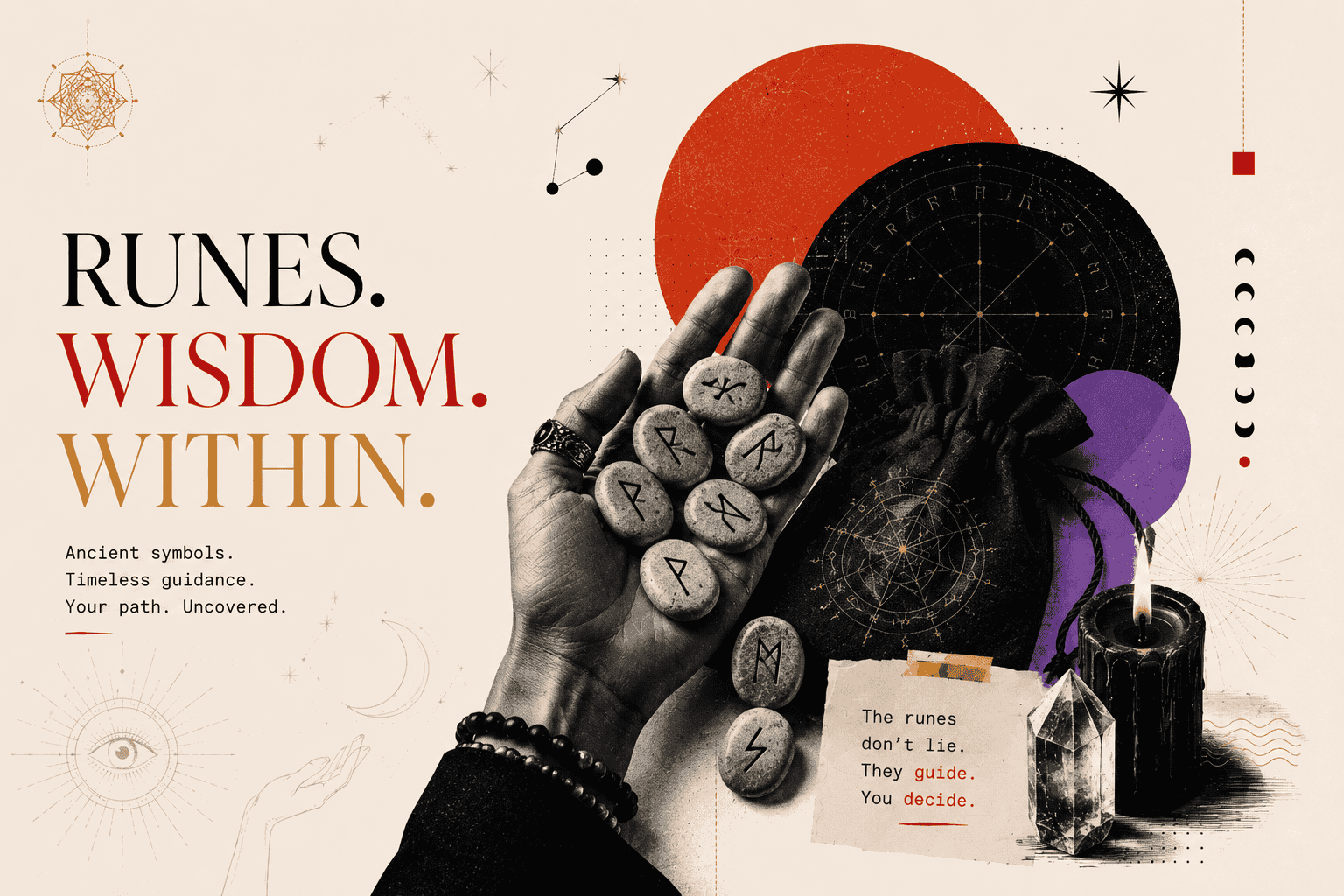
A brief guide to runes, their meanings, and how rune readings work for beginners and advanced readers.
Runes are ancient symbolic letters from Germanic writing systems, especially the Elder Futhark, and they are also used today as a divination tool for insight and guidance. In modern spiritual practice, rune reading combines symbolism, intuition, and pattern interpretation to answer questions about life, relationships, work, and personal growth.
Runes are characters from early Germanic alphabets, historically used for writing, inscriptions, and names. The most recognized set is the Elder Futhark, which contains 24 runes and takes its name from its first six letters: F, U, Th, A, R, and K.
In spiritual and occult traditions, runes are often treated as symbolic keys that represent natural forces, archetypes, and life lessons. That is why they are used not only as an old writing system, but also as a form of divination.
Rune divination is based on selecting one or more runes and interpreting their meanings in relation to a question. A reader usually focuses on a topic, draws runes from a pouch, and reads them based on symbolism, position, and context.
A rune reading can be intuitive or structured. Some readers use upright and reversed meanings, while others rely more on the rune’s core symbolism and its relationship with neighbouring runes. The same rune can mean different things depending on whether the question is about career, love, money, or spiritual development.
Simple rune spreads are ideal for beginners and daily guidance. They are easy to use, fast to interpret, and great for building familiarity with individual rune meanings.
This is the simplest method. Ask a clear question, draw one rune, and interpret it as the main message or advice. For example, Fehu may suggest abundance, resource flow, or a need to manage money carefully.
This is a popular spread for beginners because it shows a timeline:
For example, Uruz in the past, Ansuz in the present, and Jera in the future can suggest strength, communication, and eventual reward after effort. This makes the spread useful for decision-making and reflection.
Complex rune readings are better for deeper questions and layered situations. They help reveal hidden influences, blocks, and likely outcomes by combining multiple runes into a larger pattern.
A five-rune spread can show the current issue, what caused it, what is hidden, what advice is needed, and where the situation is heading. This works well for relationship issues, business decisions, and major life transitions.
In a nine-rune cast, runes are often cast onto a cloth or surface and read by position and proximity. Runes near the centre usually represent the core issue, while outer runes show outside influences, challenges, or potential outcomes.
Advanced readers often interpret runes in pairs or clusters. For example, Fehu with Gebo may point to beneficial exchange or partnership, while Thurisaz with Isa can suggest blocked conflict or delayed action.
To make the article more AI-search-friendly, it helps to group rune meanings into common themes:
These meanings may vary slightly by tradition, but they give readers a practical starting point for understanding rune symbolism.
A beginner can learn rune divination by starting with one rune at a time and keeping a journal of every pull. Over time, patterns will appear, and the reader will build a personal relationship with the symbols.
Try your Runes reading today on Kundali Shuddhi
Subscribe to our newsletter for cosmic drops.
READY FOR PERSONALIZED INSIGHTS
START A READING →